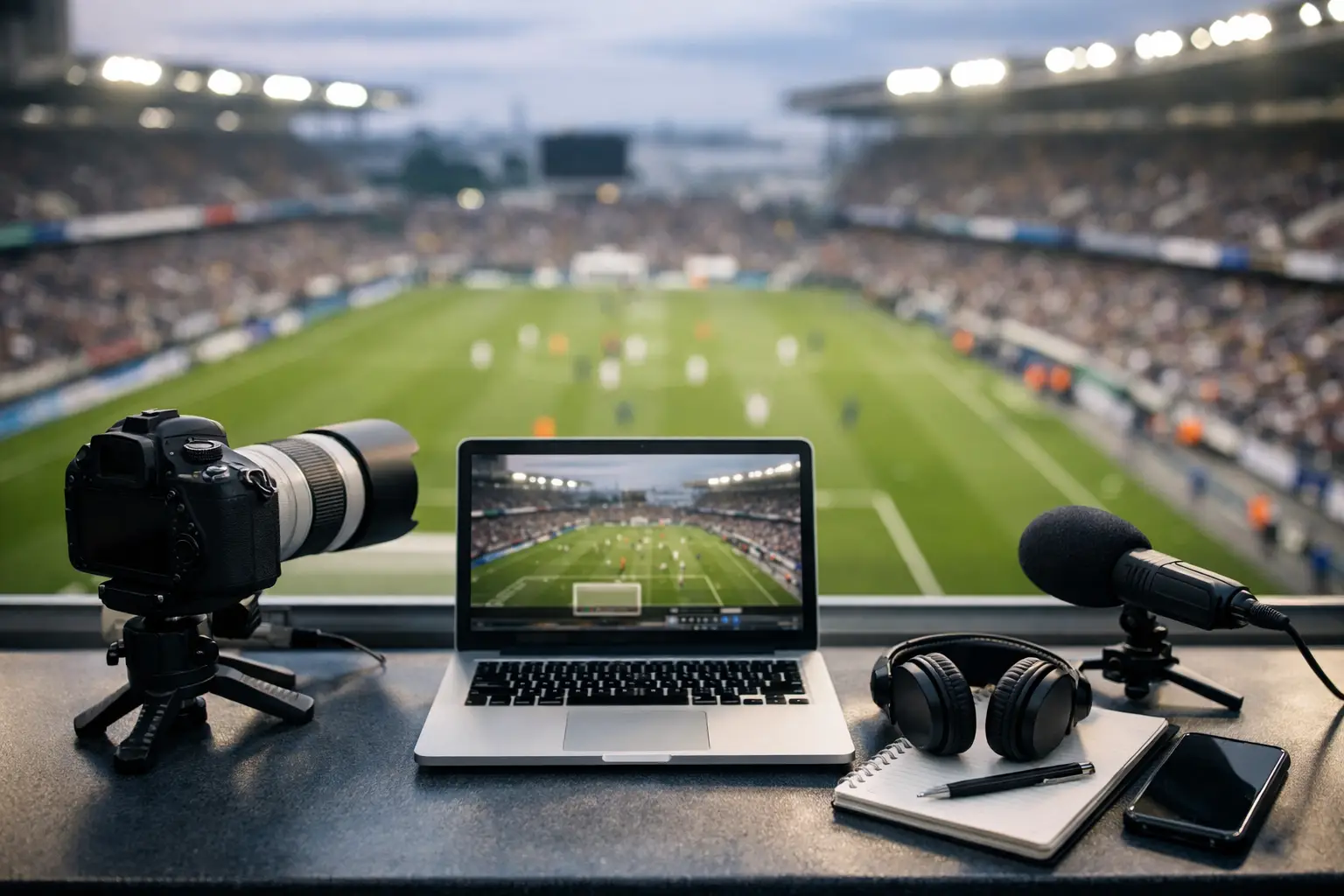
Miss the first ten minutes and you usually miss more than the first ten minutes. Team news lands, the shape becomes clear, and one early chance can tell you what kind of game is coming. That is why a football matchday coverage guide matters. Good coverage is not just a live score. It is the difference between knowing the result and understanding the match.
For most readers, matchday coverage needs to do three jobs quickly. It should tell you what is happening now, what has already happened, and what it means. If any one of those is missing, the experience feels thin. A fast update feed without context is noisy. A detailed report without live timing is late. Strong football coverage sits in the middle and keeps moving.
What good football matchday coverage looks like
The best matchday coverage starts before kick-off. Readers want the fixture time, the competition, the venue, and the likely stakes. A league match between mid-table sides is not covered in the same way as a title decider, a derby, or a cup tie with extra pressure on the manager. Context changes what matters.
Then come the line-ups. This is where coverage becomes useful rather than generic. A missing centre-half can reshape the match. A winger starting after a lay-off can change the tempo. If a side sets up with a back three instead of a back four, readers want that flagged early and clearly. You do not need long tactical essays, but you do need enough detail to show why the selection matters.
Once the match begins, speed matters, but so does judgement. Not every passage of possession deserves the same weight. Readers checking updates on their mobile phone want the key moments surfaced fast – goals, penalties, red cards, injuries, major saves and obvious swings in momentum. Smaller details still matter, but they should not bury the main story.
A football matchday coverage guide for readers and publishers
If you are following a busy football weekend, the smartest approach is to treat coverage in layers. Start with the fixture and team news. Move to the live match updates. Then check the result and the short post-match reaction. That order sounds obvious, but it is what stops matchday information becoming cluttered.
For publishers, the same principle applies. Coverage should be built in stages, with each stage answering a specific reader need. Before kick-off, readers want certainty. During the match, they want speed. After full-time, they want clarity.
Before kick-off: set the match up properly
Pre-match coverage does not need to be long. It needs to be accurate and relevant. The fixture details should be easy to scan, and any major team news should sit near the top. If there is a late fitness issue, suspension, tactical switch or debut, that is the story before a ball is kicked.
This is also the point where form and stakes matter. A side chasing promotion carries a different pressure from one simply trying to stop a poor run. For cup matches, readers often care more about selection choices and rotation. For league matches, table position and recent results often carry more weight. The right emphasis depends on the competition and the moment in the season.
During the match: focus on decisive moments
Live coverage works best when it respects the pace of football. Unlike some sports, football often turns on very few moments. That means updates should avoid filler and give proper weight to anything that shifts control of the game.
A goal update should tell the reader more than the scorer’s name. Was it a set-piece? A mistake at the back? A counter-attack after sustained pressure? That single line helps people who cannot watch understand the shape of the game. The same applies to cards, substitutions and injuries. The detail should be brief, but it should still explain the event.
Momentum is harder to cover, but it matters. A team can be behind and still look likely to score next. Another can dominate possession without creating much. Useful matchday coverage reflects that without overcomplicating it. Simple phrases are enough if they are accurate.
Half-time: give readers the state of play
Half-time is where many readers catch up. Some are just joining, others are checking other matches at the same time. This is why the break matters so much in matchday coverage.
A good half-time update should cover the score, the key moments, and the general pattern of play. If one side has controlled midfield, if the best chances have fallen to the away side, or if the match has been scrappy and short on quality, say so plainly. Readers do not need padding here. They need a clear picture of what the first half has been.
Full-time: result first, meaning second
At full-time, the first job is obvious – post the result quickly and cleanly. After that, the value comes from what the result means. Has the win moved a club into the play-off places? Has a draw extended an unbeaten run without solving a scoring problem? Has a defeat increased pressure before a difficult fixture list?
Post-match coverage is strongest when it moves straight from result to consequence. Quotes can help, but they are not always the main thing. Often the key question is whether the match followed a trend or broke one.
What readers actually want on matchday
Football fans do not all follow matches in the same way. Some watch one game closely. Others track six at once while checking results elsewhere. That is why the most useful coverage is flexible.
At a minimum, readers want fast access to line-ups, live updates, major incidents and the final score. Beyond that, it depends. If the match is high-profile, there is more interest in tactical shape, individual battles and manager reaction. If it is one of many Saturday fixtures, readers often want speed and clean updates above all else.
There is a trade-off here. More detail can improve quality, but too much can slow the reader down. For a football-only news platform, the best balance is usually concise reporting with enough context to explain the match properly. That fits how most supporters check football during a live round of fixtures.
Common mistakes in matchday coverage
The biggest mistake is treating every update equally. A corner in the 12th minute is not as important as a forced substitution before the break, and readers can feel the difference immediately. Coverage loses value when it becomes a flat stream of events with no editorial sense.
Another problem is overreacting. One early chance does not always mean one team is on top. A side can score against the run of play and still be second best. Matchday reporting needs restraint as much as speed.
There is also the issue of timing. If line-ups are late, the coverage starts on the back foot. If the final result is buried under commentary, readers get frustrated. Football coverage should always make the current state of the match easy to find.
How to judge if coverage is doing its job
The simplest test is this: can a reader understand the match in under a minute? If they missed kick-off and open the page midway through the second half, they should be able to see the score, the major incidents, and the overall direction of the game straight away.
The second test is whether the coverage still works after full-time. A live page that makes sense only in the moment is useful, but limited. If the updates also help explain the result once the whistle goes, the coverage has more lasting value.
For football readers in the UK, where fixture schedules stack up quickly across the Premier League, EFL, Europe and international breaks, that efficiency matters. Supporters are often checking multiple competitions in the same day. Coverage that respects that habit will always be more useful than coverage trying to do too much at once.
Why the best matchday coverage feels simple
Simple does not mean basic. It means the reader never has to work too hard to find the point of the match. The score is clear. The main incidents are clear. The consequences are clear. Everything else supports that.
That is why the strongest football sites keep their matchday offering tight. They do not confuse speed with clutter or detail with quality. They know that on a busy fixture list, relevance wins.
If you are choosing where to follow a game, look for coverage that gets the essentials right first and adds insight where it counts. On matchday, clear information beats noise every time.