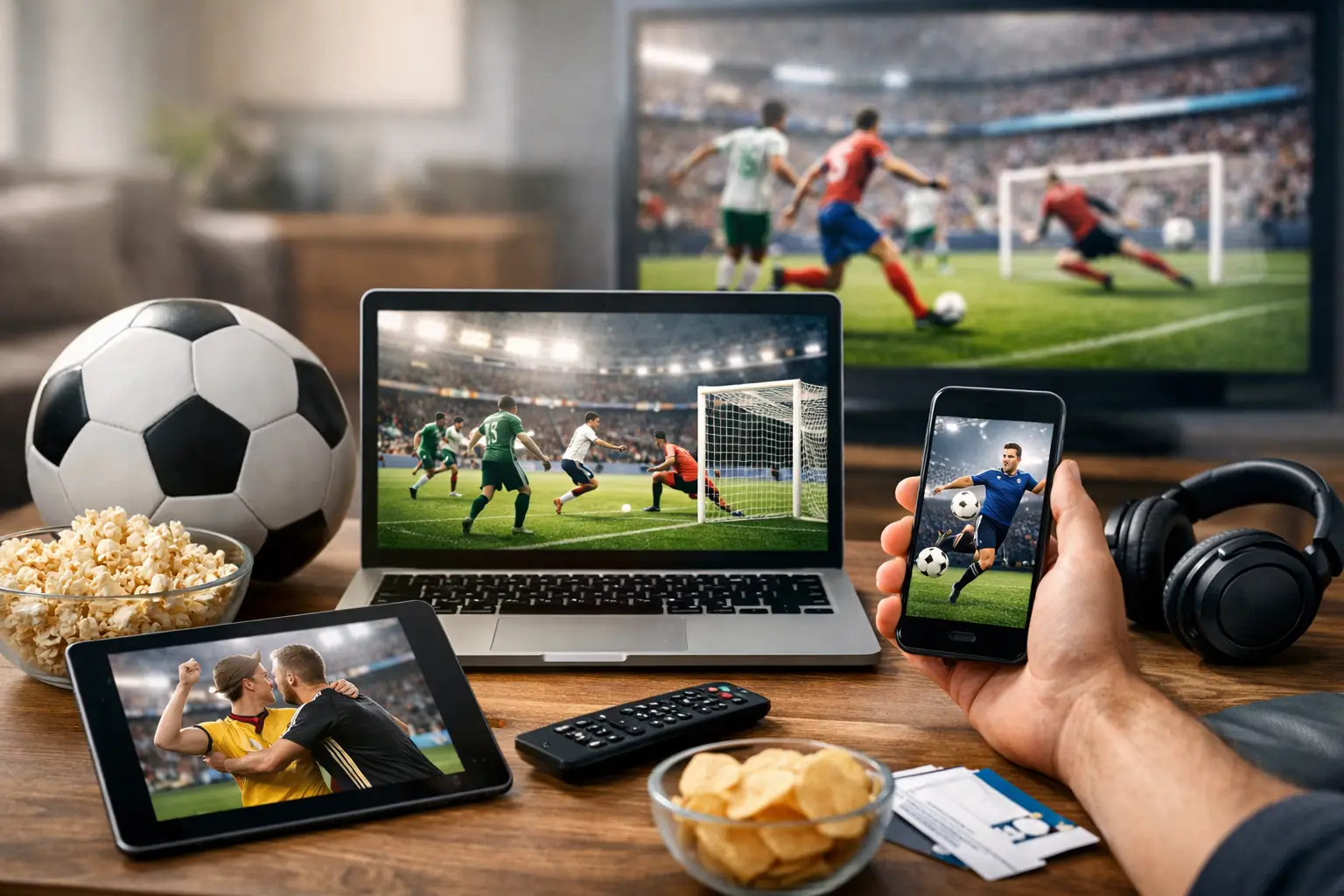
If you miss one team sheet, one injury update or one late goal, football moves on without waiting. The best ways to follow football are the ones that give you fast access to news, matches and results without forcing you to sift through noise.
For most fans, the problem is not lack of coverage. It is too much of it, spread across too many places. One app has scores, another has transfer talk, another has line-ups, and social feeds mix genuine updates with rumour and recycled clips. A better approach is to build a simple routine around a few reliable habits.
The best ways to follow football start with one clear hub
If you want to keep up properly, start with a football-only source that separates news, matches and results clearly. That matters more than people think. General sports sites often bury football under other headlines, while social platforms put the loudest post first rather than the most useful one.
A dedicated football hub makes it easier to check what is happening now, what is coming next and what has already finished. That is especially useful on busy weekends, midweek European rounds and transfer deadline days, when updates come quickly and priorities change by the hour.
The key is not finding a source that does everything perfectly. It is finding one that covers the basics cleanly enough that you can return to it several times a day without friction.
Use live scores for speed, but not as your only source
Live score services are one of the best tools for following football in real time. They are ideal when you cannot watch a match but still want to track goals, cards, substitutions and full-time results. If you follow multiple leagues, they also give you a quick read on what matters elsewhere.
Still, live scores have limits. They tell you what happened, but not always why it matters. A 1-0 result might look routine until you realise it came from a relegation rival, a heavily rotated side or a stoppage-time winner after a red card.
That is why live scores work best as your first layer, not your only one. Use them for immediacy, then check match reports or news coverage for context.
Keep notifications tight or they become useless
Alerts can help, but too many of them make you switch off. If your mobile is buzzing all day for minor stories, you stop paying attention when something important actually lands.
A better setup is selective. Choose alerts for your club, major breaking news, confirmed line-ups and match starts. You may also want goal alerts for key fixtures, especially if you follow title races, relegation battles or accumulator-heavy weekends.
Everything else can usually wait until your next check-in. The point is to stay informed, not interrupted.
Match pages matter more than endless scrolling
When fans say they are keeping up with football, they often mean they are scrolling through posts. That can work for highlights and quick reactions, but it is not the most reliable way to stay on top of the game.
Match pages are more useful because they keep the important information in one place. You can see kick-off times, line-ups, live events and the final score without hunting around. During packed fixture periods, that saves time and reduces the chance of missing something important.
It also helps if you follow more than one competition. Domestic leagues, cups and European matches can overlap, and social feeds rarely present them in a clean order. A proper match section does.
Follow football news with a routine, not constantly
One of the best ways to follow football news is to stop trying to consume every update in real time. Very few stories need your attention the second they break. Most fans are better served by checking at a few set points during the day.
Morning is useful for overnight developments, injury news and build-up pieces. Late afternoon is where team news starts to matter more. Evening checks make sense for live matches, results and post-match reaction. That basic rhythm covers most of what a regular supporter actually needs.
This approach also helps you sort signal from noise. If a rumour is still standing after a few hours and has been picked up properly, it may be worth your time. If it vanishes as quickly as it appeared, you have saved yourself the bother.
Social media is fast, but it needs filtering
Social platforms are still part of the best ways to follow football, mainly because they are quick. Goals, clips, line-up chatter and manager quotes often appear there before they are packaged elsewhere. On matchdays, they can be useful for seeing what supporters, reporters and clubs are reacting to in the moment.
The trade-off is reliability. Fake quotes, old clips presented as new ones and transfer claims with no real basis spread easily. That is why social media should be treated as a feed of prompts, not a final source.
If something looks important, confirm it through a proper football news source. This matters even more in the transfer window, when repetition can make weak stories feel true.
Pick your competitions instead of chasing everything
A lot of fans burn out because they try to follow every league, every cup and every big-name story at once. That usually leads to shallow tracking rather than proper understanding.
It is better to decide what matters most to you. That may be your club first, then your league, then major European fixtures. Or it might be Fantasy Premier League relevance, international tournaments and transfer news. There is no perfect model, but there is a sensible one for your time.
Being selective does not mean missing out. It means knowing where to pay attention. You can still scan wider results while keeping your detailed focus where it counts.
Results pages are underrated if you follow football properly
Results pages often get treated as an afterthought, but they are one of the most efficient ways to stay informed. A quick check tells you who won, who slipped up and how the table may have shifted.
That is especially useful if you support a club in a promotion race, a relegation battle or a tight top-four fight. Your own result rarely tells the whole story. The wider picture often changes because of matches you did not watch.
This is where a clean football results section earns its place. It lets you understand the day in minutes rather than piecing it together from scattered posts and half-seen clips.
Watching less can still mean following better
A lot of supporters assume the best football follower is the one who watches the most matches. Not necessarily. Unless you have unlimited time, trying to watch everything usually means half-watching a lot.
You can stay sharper by choosing your live viewing carefully and relying on updates for the rest. Watch the fixtures that matter most to you, then use match pages, scores and post-match coverage to cover the wider landscape. That gives you both detail and range.
It also suits modern schedules better. Most people cannot give an entire weekend to football from first kick-off to last. Following smartly is often more realistic than following constantly.
Build a simple system and stick to it
The best ways to follow football are usually the simplest. Use one main source for football news, football matches and football results. Add live score tracking for speed. Keep notifications selective. Treat social media as a supplement, not the backbone.
If you want a cleaner experience, Foot News fits that practical model well because it centres football-specific updates instead of burying them inside wider sport coverage. That kind of focused setup is often the difference between casually checking and actually keeping up.
Football does not slow down, but your routine can still be manageable. If your setup helps you find the right update at the right time, you will follow the game better without giving it your entire day.