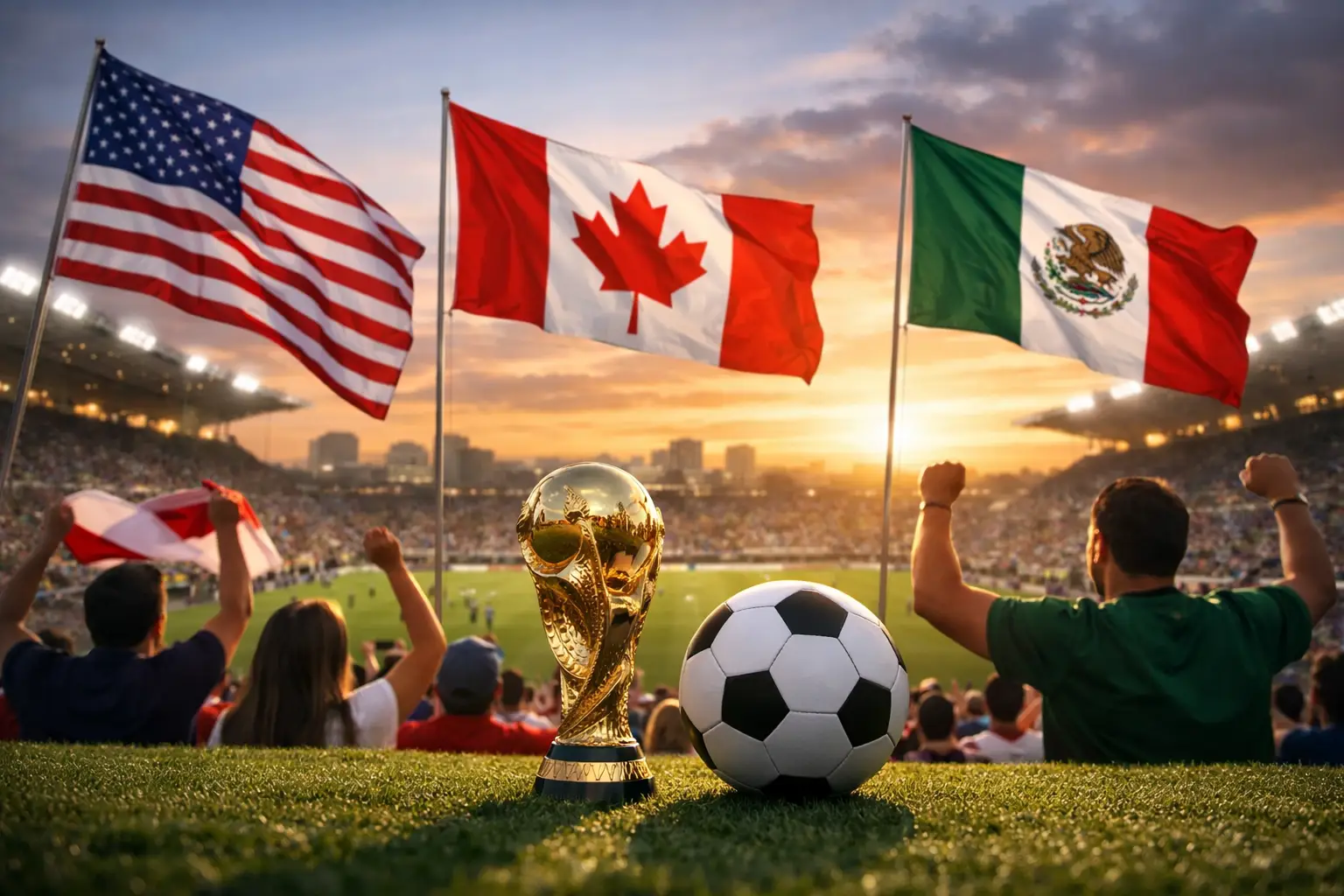
Three host nations, 48 teams and a tournament spread across a continent means World Cup 2026 will not feel like any previous edition. For supporters, that brings more matches, more travel questions and more debate about whether bigger really means better. For players and coaches, it brings a very different challenge.
This is the first men’s World Cup to be hosted jointly by Canada, Mexico and the United States. It is also the first to expand from 32 teams to 48. Those two changes alone make it one of the most significant shifts in the modern history of international football. The scale is obvious, but the real story is how that scale will affect the football itself.
Why World Cup 2026 matters
Tournament expansions are usually sold on optimism. More places mean more nations represented, more fans involved and more chances for emerging sides to make an impact. That part is true. More teams from Africa, Asia and North America should bring a wider mix of styles and stories.
But there is another side to it. Bigger tournaments can also feel harder to follow. The old 32-team format was familiar and relatively clean. Fans knew the rhythm – group stage, knockouts, final. World Cup 2026 keeps that basic path, but the volume of games and the spread of venues will test attention spans, squad depth and logistics.
For regular football followers, that makes this tournament worth watching well before the opening match. The decisions made around scheduling, player welfare, travel and qualifying will shape not just 2026 but future tournaments too.
The World Cup 2026 format
The headline change is simple: 48 teams instead of 32. That expansion creates a much larger field and opens the door to countries that would previously have fallen short in qualifying.
The current plan is for 12 groups of four teams. The top two in each group will go through, along with the eight best third-placed teams. That means the knockout stage starts with a round of 32 rather than a round of 16.
On one hand, this format avoids the problems that might have come with three-team groups, especially the risk of passive final group matches. On the other, it means more fixtures and less recovery time in a calendar that already feels crowded. A team reaching the final will have to come through more rounds than before, and that matters at elite level where margins are small.
There is also a viewing trade-off. More knockout matches should produce more drama. Yet the expanded group stage may include a wider gap between the strongest and weakest sides, at least on paper. Some one-sided results are likely. The question is whether the tournament can keep its edge across a longer schedule.
Host nations and what they bring
The three hosts each add something different. The United States brings scale, major stadiums and commercial weight. Mexico brings football culture and strong World Cup history. Canada brings a growing football audience and a chance to push the game further into the mainstream there.
Mexico’s role is especially notable. It will become the first country to host men’s World Cup matches across three different tournaments. That gives the event a link to past editions, even as the format moves in a new direction.
The shared hosting model makes sense for a 48-team competition because no single country would handle the full burden easily. Still, it creates practical complications. Distances between venues can be huge. That affects travelling supporters most obviously, but it can also influence team preparation, recovery and even match tempo.
A compact tournament allows fans to move between cities with relative ease. World Cup 2026 is not that. For supporters hoping to follow a team in person, planning will matter more than ever. Costs, flight times and border arrangements could become part of the matchday conversation.
Which teams could benefit most
Expansion always changes the balance slightly. Traditional powers should still dominate the late rounds because they have the deepest squads and the most experience handling tournament pressure. Over seven or eight high-level matches, that usually tells.
Where things get interesting is below that top tier. Nations that regularly sit just outside the elite now have a better chance to qualify, settle quickly and build momentum. A kind group, one standout player and one strong defensive structure can take a team a long way in tournament football.
That matters for confederations that have often felt squeezed by the older format. African and Asian nations in particular should have more representation, and that could improve the variety of the tournament. It does not guarantee deep runs, but it increases the odds of one or two sides breaking the pattern.
For the home nations, there is another angle. Host countries usually get an extra push from familiar conditions and local support. The United States, Mexico and Canada will all expect to be competitive, though expectations will differ. Mexico has the strongest World Cup tradition of the three, while the United States will carry pressure to deliver on home soil. Canada, still building at this level, may benefit most from the occasion itself.
The fixture load and player welfare issue
This is one of the least glamorous parts of the conversation, but it matters. Top players already face crowded domestic and European calendars, international breaks and limited off-seasons. Adding a larger World Cup only increases scrutiny on workload.
Not every player arrives at a major tournament in the same condition. Squad depth helps richer football nations and clubs. Teams with strong benches can rotate and recover. Others rely heavily on a few key names and may fade if the schedule becomes too demanding.
That is why World Cup 2026 will be watched closely by clubs as well as supporters. If injury concerns rise or performance levels drop late in the tournament, the debate around calendar overload will grow louder. The football could still be excellent, but the margin for fatigue-related dips is real.
What fans should watch out for
The obvious focus will be on the big contenders, but the expanded format makes the middle of the field just as interesting. Watch the qualifying stories, not just the favourites. New or returning nations often give the group stage its best moments.
Venue allocation will also matter. Some teams may face heavier travel than others depending on where their matches land. Climate, distance and recovery windows could have more influence than usual. That does not decide results on its own, but it can shift fine margins.
Then there is the atmosphere question. Large North American stadiums can stage huge occasions, but World Cups are remembered for crowd intensity as much as infrastructure. Some venues will deliver that naturally. Others may feel more spread out. The best matches will likely be the ones where football culture and stakes meet in the right setting.
Will bigger mean better?
That depends on what you want from a World Cup. If you value inclusivity, broader representation and more knockout football, World Cup 2026 should deliver. More nations will feel involved, and more supporters will have a stake in the competition.
If you prefer a tighter tournament with fewer dead rubbers and less travel sprawl, there are reasons to be cautious. Bigger events can lose some of their sharpness. Not every extra match adds value, and not every expansion improves quality.
The likely reality sits somewhere in the middle. The early phase may feel uneven at times, but the latter rounds should still bring the intensity that defines major international football. Once the field narrows, pedigree, nerve and form will matter as much as ever.
Why this tournament will set the tone for the future
World Cup 2026 is more than another edition of the competition. It is a test case for football at its largest scale. If the format works, if the schedule holds up and if the football remains compelling, then this version of the tournament may become the norm.
If it feels overstretched, too commercial or too difficult to follow, the criticism will be hard to ignore. FIFA will still point to attendance and reach, but supporters tend to judge tournaments on simpler terms – memorable matches, clear storylines and a sense that the football stayed at the centre of it.
That is the standard World Cup 2026 will be judged against. It has the size to make history, but size alone is never enough. What fans will care about most is whether the tournament still feels like the World Cup when the serious matches begin.
As the countdown continues, the smart approach is simple: keep an eye on the format, the travel demands and the qualifying race, because this tournament will start shaping the football story long before the first ball is kicked.